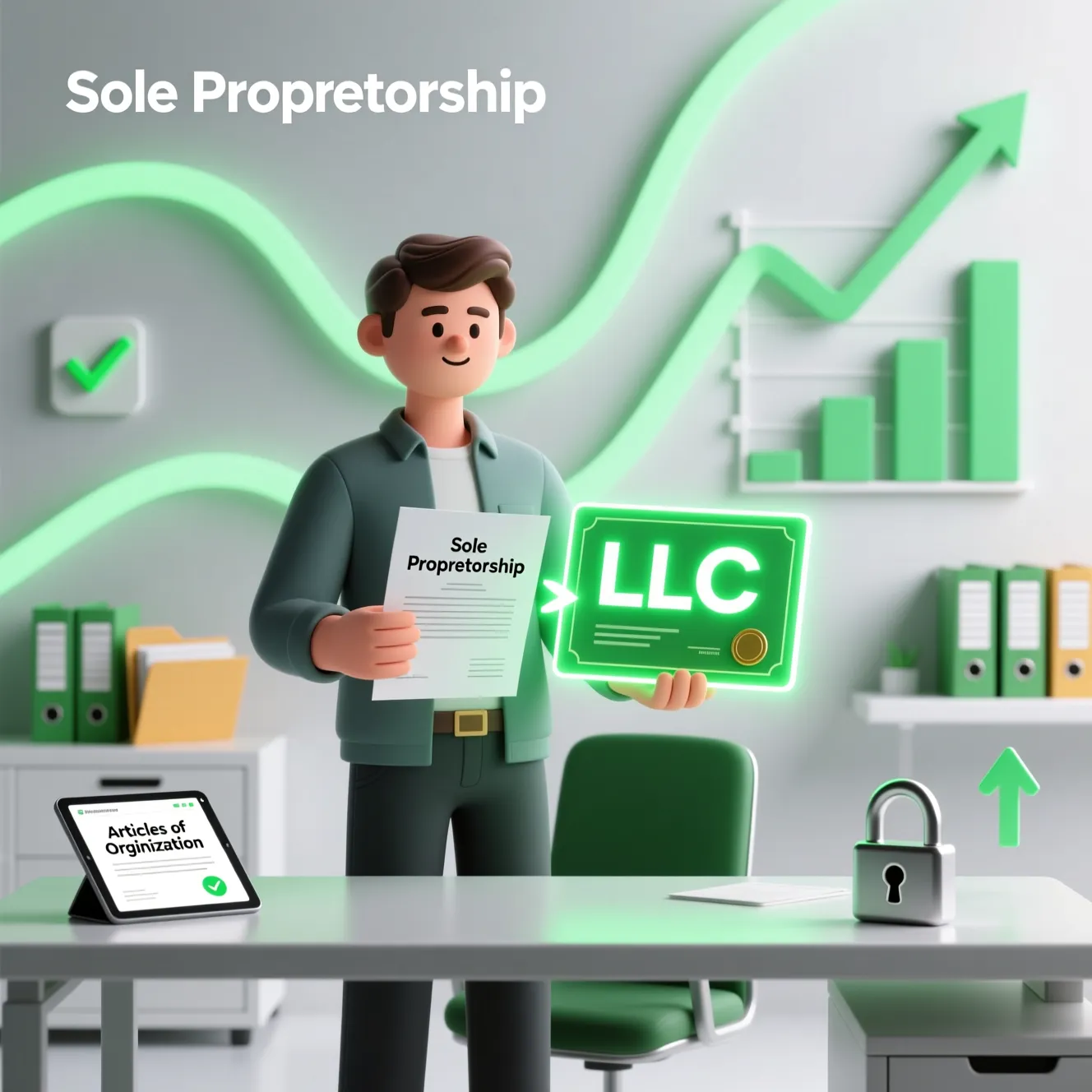


If you are thinking of launching a business, you are in good company. For LLC formation 2026, you need to take your first smart step by knowing the types of LLCs and understanding the things that have changed over time.
With all this knowledge, you need to know why entrepreneurs choose LLCs and the best state for your LLC formation. Later, you need to know how to structure an LLC, as this is a complex task. Even a U.S Census Bureau paper shows that many businesses start small. And this matters from day one.
What is an LLC?
A Limited Liability Company (LLC) is a business structure allowed by state statute that protects your personal assets while offering flexible tax options for business income.
It combines the best elements of different business structures, like corporations. Since LLCs legally exist as a separate entity from their owners, their personal assets are usually protected.
3 Types of LLCs
With an understanding of what an LLC is, you need to know the types of LLCs before learning how to structure an LLC.
-
Single-Member LLC
A single-member LLC has just one owner. This type is legally distinct from its owners in terms of liability. The IRS treats single-member LLCs as disregarded entities unless they file the entity clarification election form and elect corporate taxation.
-
Series LLC
A series LLC lets a single-master LLC own multiple independent divisions or series. Each division operates independently and is responsible only for its own debts and obligations. This structure means the umbrella LLC owns other LLCs, and each division can have its own members.
-
L3C
A low-profile LLC (L3C) bridges the gap between for-profit and nonprofit organizations. This hybrid business structure attracts foundations and socially responsible investors who want to support good causes while earning returns.
How did LLC change in 2026
LLCs laid their foundation in 1977 in Wyoming as a new business idea. As time passed, other states slowly started adopting them. With time, the popularity increased as they protected owners and kept taxes flexible.
The process was the same, but in 2026 the government launched the best LLC structure. All the strict rules were paused or canceled, naming it the BOI rollback. Beneficial Ownership Information (BOI) is the ownership details that FinCEN may ask a company to report.
For many U.S. LLCs, the rules became easier to follow. In simple words, we can say that LLCs remained the same, but the paperwork became simpler.
Also read: Post-BOI LLC Formation: What Still Matters After the Reporting Rollback
Why do Entrepreneurs Choose LLCs
Limited liability and flexible tax treatments help many small business owners. These features are not just the ones that compel entrepreneurs to choose an LLC. Before you go through the LLC setup guide, you must know some of the perks that increase the graph of choosing this over a traditional business.
-
LLC Offers Entrepreneurs Personal Asset Protection
One of the core reasons LLC compliance 2026 is popular is that they offer limited liability protection to LLC members. A business owner operating a sole proprietorship is personally liable for business debts and lawsuits against the company. Their personal assets are at risk. Forming an LLC shields the business owner’s personal assets from the liabilities of the business.
-
It Gives Them Favorable and Flexible Tax Treatment
LLCs may be classified as a sole proprietorship, partnership, or corporation for federal tax purposes. To use it, a small business owner with an LLC can record the LLC’s income on their personal tax returns. In this way, they can avoid corporate taxes, called double taxation. If there are two or more LLC members, their share of income goes on their personal income tax returns. However, members can opt for their LLC to be taxed as a corporation if they wish, providing ultimate flexibility in a business structure.
-
LLCs Require Less Burdensome Requirements from Entrepreneurs
While corporations, as legal entities, provide personal liability protection, they are more burdensome to create and maintain. A corporation must hold annual meetings and keep bylaws, annual reports, and meeting minutes. LLCs don’t require much paperwork. There are no requirements for meetings and corporate minutes. LLC owners may want to create an operating agreement for their LLC.
-
It Offers Them an Easier Management Structure
According to LLC compliance 2026, a corporation must have a board of directors and corporate offices. LLCs have fewer layers of management. A single-member LLC has only one member, whereas a multi-member LLC is managed by its members. The members participate in the day-to-day operations and can bind the company with their decisions. Similarly, an LLC with a manager member appoints a manager or a team of managers to operate the business.
-
LLC Enhances a Business’ Credibility and Branding
Many solo proprietors want to create an LLC with a business name and brand, not just their personal name. Following this, LLC creates the perception that your company may be larger and more established than it actually is. Additionally, many companies want to work with LLCs rather than sole proprietors as independent contractors, so they are not mistaken as employees by the IRS.
Which State Fits Your LLC Best
Living in the U.S and setting up your business, you need to choose a place for your business. When it comes to choosing one that follows the best LLC structure, opt for the place where your business is actually present. The SBA says you should pick your business location first, then choose your structure and register in the right state. Each state can affect taxes, paperwork, and personal liability.
That is why owners often compare California, Texas, Wyoming, and their home state before they file. Also, an LLC needs a registered agent in the state where it is formed. The best idea of how to start an LLC is to keep it simple. Start with where you live and work, then compare the extra costs and rules only if another state truly fits better.
5 Steps for LLC Formation 2026
LLC formation 2026 involves several key steps. As the specific requirements vary state by state, here is how to start an LLC with 7 simple steps. At any time, if you think you need professional assistance in forming or maintaining an LLC, Core Finance is ready to help.
Step#1: Choose a name for your LLC
The first and foremost step in the LLC setup guide is to check the state’s business database before choosing a name for your LLC to ensure it is available. Each state has certain rules for naming. Most of the states don’t allow duplicate LLC names and may require you to include LLC or Limited Liability Company with the name. There are often some restrictions on certain words or phrases that cannot be used in your business name.
Step#2: Choose a registered agent
Your LLC requires a registered agent. This person will receive legal documents for your business. You have the chance to act as your registered agent, choose an LLC member, or use a third-party registered agent service like Core Finance. Ensure that if you are planning to be your own registered agent. For this, you need to be physically present at the registered address during normal business hours.
Step#3: File your articles of organization
Submit your articles of organization to your state’s Secretary of State office. Most states offer online filing options and provide standard forms to complete. You can handle this step yourself or work with an attorney or filing service. State filing fees change according to the state.
Step#4: Draw up an LLC operating agreement
If you have a multi-member LLC, create a written operating agreement that outlines day-to-day business operations, member duties, and rights. Learn the way to handle asset distribution if a member leaves and the dissolution procedure.
Step#5: Obtain your EIN and check tax requirements
Last but not least, the LLC setup guide states that you will need your employer identification number (EIN) from the IRS before registering with your state. You can apply for it for free online through the IRS website or by mail by filling out the form. Ensure that you check your state’s specific tax requirement rules. Additionally, you need to know that not every LLC has an EIN. An owner of a single-member LLC that is a disregarded entity and does not have employees may not need an EIN. Such owners can use their Social Security number.
3 Steps to Follow After LLC formation 2026
Once you have succeeded in LLC formation 2026, it is time to consider its post-formation process. For this, you need to consider some of these steps.
Step#1: Open a bank account for your LLC
After completing your operating agreement, open a business bank account. You will typically need your EIN or Social Security number (SSN), LLC formation documents, and operating agreement to set up your account. You can also request a business credit card for your personal and business expenses separately, build business credit, and earn business-related rewards and benefits.
Step#2: Create an LLC operating agreement
Your operating agreement serves as the foundational governance document that defines ownership structures, management responsibilities, profit distribution, and operational procedures for your business. This document is essential for protecting your limited liability status, preventing disputes among members, and establishing professional credibility with banks, investors, and business partners. Without a comprehensive operating agreement, your LLC will be governed by default state laws.
Step#3: Obtain necessary licenses and permits
Now this step depends on your industry. You may need a business license, professional permits, industry-specific certifications, or state and federal registrations. Remember, the LLC formation rules vary by state. So it is better to check local requirements.
Common Mistakes New LLC Owners Make
Although entrepreneurs follow the LLC setup guide, they often make simple mistakes at the start.
- Choosing the wrong state without checking where the business really runs.
- Mixing personal and business money. That can create confusion and weak records.
- Some owners also skip the bank account, ignore bookkeeping, or wait too long to set up payroll.
- Another common mistake is choosing a tax structure before the business is ready.
These problems are easy to avoid. Start clean. Keep your money separate. Track everything from day one. And make each decision based on your real business needs.
When should your Business Elect S-Corp Status?
You need to follow strict IRS deadlines to elect the right time for your business S-Corp status. The S-Corp choice depends on your income, growth, and tax goals.
Some owners form the LLC first and wait before making any tax changes. Others switch later when profits grow. That can be a smart move. You may not need extra tax work right away.
But once the business starts making steady money, the S-corp setup may save taxes in the right situation. The key is timing. Do not rush it. Look at your income, your payroll needs, and your long-term plan before you decide.
A Checklist for the Initial 30 Days
As you have taken a step toward LLC formation 2026, this is complex at the first stage. Make sure that you follow this checklist to make the process smooth. Your first 30 days should stay simple and organized.
- In week one, finish your formation steps and get your business details in order.
- In week two, apply for your EIN and open a business bank account.
- In week three, set up your books and create a basic system to track income and expenses.
- In week four, review payroll, owner pay, and your tax setup. Also, check for any local licenses you may need.
Remember, the first month is about building a clean foundation. Small steps now can save you a lot of trouble later.
Conclusion
LLC formation 2026 is not a complex task. Taking one step at a time will make the process simple and smooth. You should begin by choosing the right state. Set up all your records early and keep business money separate. When it comes to changing the tax status, think before you take a step. With a clear plan and simple habits, your LLC can start strong and grow with less stress.
Hire: Top LLC Formation Company in US
FAQs
Do I need to form my LLC in my home state?
Usually, yes. The best state is often the one where your business actually runs. That keeps things simple.
How long does it take to form an LLC?
It depends on the state. Some states approve LLCs in a few days. Others may take a few weeks.
Can I form an LLC online?
Yes. Most states allow online filing through the Secretary of State website. The process is usually simple.
Can an LLC own another LLC?
Yes. Some business owners use this structure for different brands, investments, or business activities.
Do LLCs need annual renewal?
In many states, yes. Some states require annual reports or renewal fees to keep the LLC active.